Mumbai Metro 3 Aqua Line: Complete Guide
Read More:

The Mumbai Metro 3 Aqua Line is one of the biggest infrastructure projects in Mumbai’s history. It is the city’s first fully underground metro line, stretching 33.5 km from Aarey Colony in the north to Cuffe Parade in South Mumbai. With 27 stations, this metro line will directly connect many important residential, business, and transit hubs.
Once fully opened, the Aqua Line will save lakhs of people from long road traffic and reduce travel time by more than half. For example, the current road journey from Aarey to Cuffe Parade takes about 90–100 minutes during peak traffic, but the same trip on the Aqua Line will take just around 54 minutes.
This project is handled by the Mumbai Metro Rail Corporation Limited (MMRCL), a joint venture between the Government of India and Government of Maharashtra. The Japan International Cooperation Agency (JICA) has provided major funding, which is why the Aqua Line also features some of the latest engineering and eco-friendly systems.
The metro is expected to carry over 1.3 million passengers every day once fully operational. It will also connect with airports, other metro lines, and suburban railway stations, making it a game-changer for Mumbai’s transport system.
History and Planning of Mumbai Metro 3 Aqua Line
The idea of the Aqua Line started way back in 2004. At that time, it was planned as a 20 km route from Colaba to Bandra. Later in 2011, the plan was extended further north to SEEPZ (Santacruz Electronics Export Processing Zone), making it a 33.5 km line.
To avoid disturbing busy and crowded areas, the entire line was designed as an underground corridor. The Mumbai Metro Rail Corporation (MMRCL) was created in 2008 to oversee the project. After receiving full approval from the Central Government in 2013, the foundation stone was laid in 2014.
But actual construction started only in 2016, after solving tender disputes and environmental issues. The project faced many delays due to land acquisition, protests about the Aarey car shed, and even a pause during the COVID-19 pandemic.
The estimated cost also went up from ₹23,136 crore to ₹37,276 crore because of delays and changes. Still, despite challenges, the Aqua Line has reached its final stage and is ready to serve the city.
Route and Stations of Aqua Line
The Aqua Line runs north to south, connecting Mumbai’s key business and residential areas. Starting from Aarey Depot, it goes through the airport, Bandra Kurla Complex (BKC), Dadar, Worli, and ends at Cuffe Parade. Out of 27 stations, 26 are underground and only one (Aarey Depot) is at ground level.
Here’s a full list of Aqua Line stations with opening phases and interchanges:
| Station | Type | Opening Date | Interchange Options |
|---|---|---|---|
| Aarey JVLR | At-grade | Oct 7, 2024 | Pink Line (under construction) |
| SEEPZ | Underground | Oct 7, 2024 | – |
| MIDC Andheri | Underground | Oct 7, 2024 | – |
| Marol Naka | Underground | Oct 7, 2024 | Blue Line |
| CSMIA T2 | Underground | Oct 7, 2024 | Red Line (under construction), Gold Line (proposed) |
| Sahar Road | Underground | Oct 7, 2024 | – |
| CSMIA T1 | Underground | Oct 7, 2024 | – |
| Santacruz | Underground | Oct 7, 2024 | Suburban Rail (Western & Harbour) |
| Bandra Colony | Underground | Oct 7, 2024 | – |
| Bandra Kurla Complex | Underground | Oct 7, 2024 | Yellow Line (under construction) |
| Dharavi | Underground | May 9, 2025 | – |
| Shitaladevi Mandir | Underground | May 9, 2025 | – |
| Dadar | Underground | May 9, 2025 | Suburban Rail (Western & Central) |
| Siddhivinayak | Underground | May 9, 2025 | – |
| Worli | Underground | May 9, 2025 | – |
| Acharya Atre Chowk | Underground | May 9, 2025 | – |
| Science Museum | Underground | Sept 30, 2025 | – |
| Mahalaxmi | Underground | Sept 30, 2025 | Suburban Rail + Monorail |
| Jagannath Shankar Sheth Metro | Underground | Sept 30, 2025 | Suburban Rail (Western Line) |
| Grant Road | Underground | Sept 30, 2025 | Suburban Rail (Western Line) |
| Girgaon | Underground | Sept 30, 2025 | – |
| Kalbadevi | Underground | Sept 30, 2025 | – |
| CSMT | Underground | Sept 30, 2025 | Suburban Rail (Central & Harbour), Green Line (proposed) |
| Hutatma Chowk | Underground | Sept 30, 2025 | – |
| Churchgate | Underground | Sept 30, 2025 | Suburban Rail (Western Line) |
| Vidhan Bhavan | Underground | Sept 30, 2025 | – |
| Cuffe Parade | Underground | Sept 30, 2025 | – |
The route ensures smooth connectivity with airports, major business hubs, and heritage areas in South Mumbai.
Construction and Challenges
Construction of the Aqua Line began in 2017, with tunneling starting the same year. Special Tunnel Boring Machines (TBMs) were used to dig underground routes safely. Some parts of South Mumbai required controlled micro-blasting because of old heritage buildings and narrow roads.
One of the toughest engineering feats was the 170-meter twin tunnel under the Mithi River, completed in 2020. This was India’s second-ever under-river metro tunnel after Kolkata.
The project faced many challenges:
- Protests about cutting trees in Aarey Colony for the car shed.
- Traffic disruptions on busy city roads during digging.
- Cost increase due to delays and pandemic.
- Legal battles that went up to the Supreme Court.
Despite all this, trial runs began in 2022, and by 2025, over 96% of work was completed.
Trains and Technology
The Aqua Line will run driverless, air-conditioned trains built by Alstom under the “Make in India” initiative. These modern trains come with:
- Wide automatic doors.
- CCTV cameras for safety.
- Women-only coaches.
- Capacity to carry up to 3,000 passengers per train.
- Regenerative braking system to save energy.
The system uses Communication-Based Train Control (CBTC) technology, which means trains can run with just 90–120 seconds gap during peak hours.
Stations have:
- Platform screen doors for safety.
- Escalators and lifts.
- Tactile flooring for the visually impaired.
- Facilities for cashless ticketing with cards and apps.
Operations, Timings, and Fares
The Aqua Line is opening in three phases:
- Phase 1 (Aarey to BKC) – Opened on Oct 7, 2024.
- Phase 2A (BKC to Acharya Atre Chowk) – Opened on May 9, 2025.
- Final Phase (Worli to Cuffe Parade) – Scheduled for Sept 30, 2025.
Timings
- First train: 5:55 AM.
- Last train: 10:30 PM.
- On Sundays: service starts from 6:30 AM.
- During festivals like Ganeshotsav, services were extended till midnight.
Fares
Fares are distance-based:
| Distance | Fare |
|---|---|
| 0–3 km | ₹10 |
| 3–6 km | ₹20 |
| 6–12 km | ₹30 |
| 12–18 km | ₹40 |
| 18–24 km | ₹50 |
| 24–30 km | ₹60 |
| 30–36 km | ₹70 |
Example: Aarey to Cuffe Parade costs ₹60–70, which is much cheaper than a taxi ride of over ₹700 for the same distance.
Ridership and Impact
When Phase 1 opened in October 2024, only about 20,000 people used it daily. But after Phase 2 opened in May 2025, ridership went up to 37,000 per day. By August 2025, the Aqua Line had already crossed 1 crore total riders.
Once the entire line opens, it is expected to serve 1.3 million passengers daily. By 2055, this number could go up to 3.15 million passengers per day.
The Aqua Line is also boosting real estate prices. Property rates in Andheri, Santacruz, and BKC have already gone up because people prefer living near metro stations. For example, property rates in Santacruz average around ₹43,898 per sq ft.
Environmental impact is also important. By reducing private car use, the Aqua Line is expected to cut pollution and fuel use in Mumbai.
Future Plans
The next plan is to extend the Aqua Line up to Navy Nagar in South Mumbai. This will add another 2.5 km and improve connectivity even further.
Also, the Aqua Line will soon connect with other metro corridors like the Pink, Red, and Yellow Lines, making a full metro network across the city.
FAQs about Mumbai Metro 3 Aqua Line
1. What is Mumbai Metro 3 Aqua Line?
It is a fully underground metro line from Aarey to Cuffe Parade covering 33.5 km with 27 stations.
2. When will the Aqua Line be fully operational?
The final phase is scheduled to open on September 30, 2025.
3. What is the fare structure of Aqua Line?
Fares range from ₹10 to ₹70, depending on the distance traveled.
4. Which areas does the Aqua Line cover?
It connects Aarey, SEEPZ, Andheri, Airport, BKC, Dadar, Worli, Mahalaxmi, CSMT, Churchgate, and Cuffe Parade.
5. Will the Aqua Line save travel time?
Yes. Trips that take 90–100 minutes by road can be completed in about 54 minutes by metro.
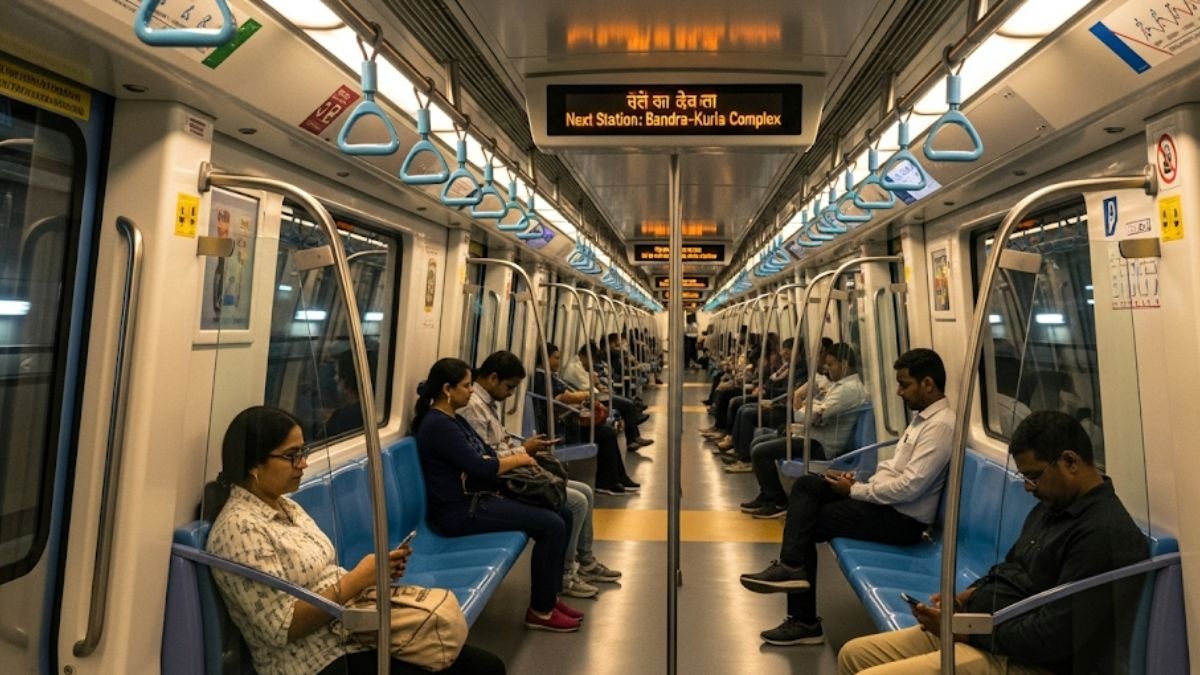
The Mumbai Metro 3 Aqua Line is more than just a transport project. It is a lifeline for Mumbai’s 20 million residents. With its modern trains, underground design, and wide network, it will change the way people travel in the city.
By connecting homes, offices, airports, and railway stations, the Aqua Line will save time, reduce pollution, and make travel more reliable. As it becomes fully operational in 2025, it will not only ease Mumbai’s traffic but also shape the city’s future growth.
Read More at mumbaipune.co.in