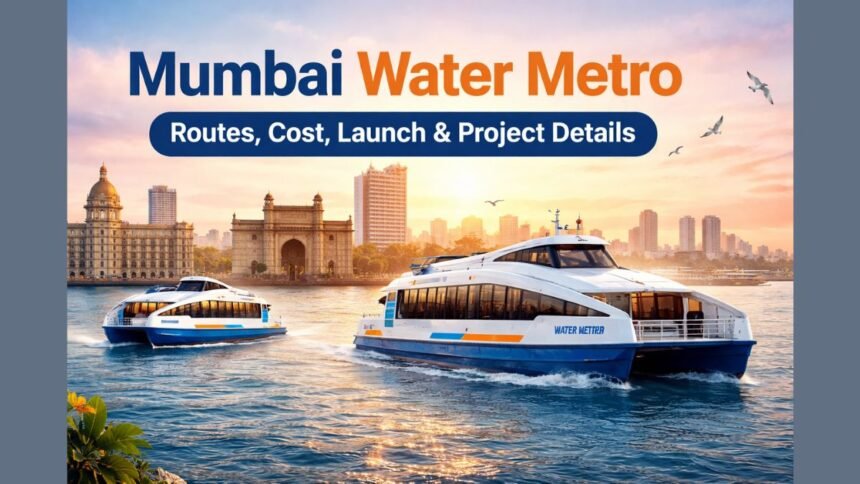
Mumbai Water Metro
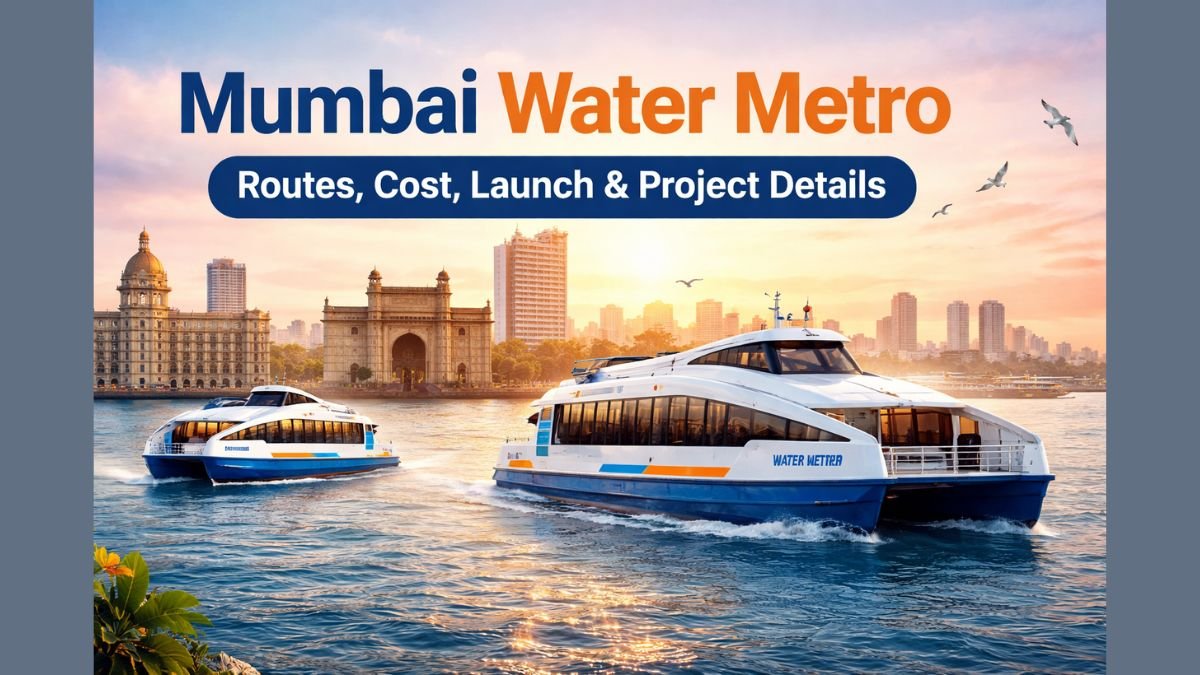
The Mumbai Water Metro is a new transport plan for the Mumbai Metropolitan Region. It will use rivers, creeks, and the sea to move people across the city. Instead of only depending on roads and trains, people will also travel by water.
- Mumbai Water Metro
- What is Mumbai Water Metro and how it will work
- Key routes planned under Mumbai Water Metro
- Extended network plan across Mumbai region
- Types of boats in Mumbai Water Metro
- Terminals and passenger facilities
- Project cost and implementation plan
- Timeline and phases
- Daily ridership and future growth
- How Mumbai Water Metro can change daily travel
- Environmental benefits of Mumbai Water Metro
- Inspiration from Kochi Water Metro
- Challenges faced in the past
- Control centres and operations
- Important highlights of Mumbai Water Metro
- Mumbai Water Metro and future of transport
- FAQ about Mumbai Water Metro
- Related Posts
Right now, most people in Mumbai depend on local trains, buses, and roads. These are often crowded and slow during peak hours. The Mumbai Water Metro is planned as an extra option to reduce that pressure.
Read More:

This system will work like a metro. It will have fixed routes, proper timings, and regular services. Boats will run often, especially during busy hours. The idea is simple: give people a faster and smoother way to travel using water routes that are not fully used today.
What is Mumbai Water Metro and how it will work
The Mumbai Water Metro is not just a ferry service. It is being planned as a full transport network. Boats will run on fixed routes, just like metro trains.
Passengers will board from dedicated terminals. These terminals will have ticket counters, waiting areas, and digital ticket systems. The goal is to make the experience similar to using a metro or local train.
The system will also connect with other transport options. This means you can shift easily from water metro to local trains, metro lines, or buses without much trouble.
Key routes planned under Mumbai Water Metro
In the beginning, around 10 major routes are expected. These routes will connect important parts of the Mumbai region.
Some key water routes include:
- Ulhas River
- Thane Creek
- Vasai Creek
- Harbour and coastal stretches
- A long route from Kalyan to Gateway of India
These routes are chosen to connect suburbs with main city areas. Many people travel long distances daily, and these water routes can help reduce travel time.
Extended network plan across Mumbai region
The larger plan is even bigger. Around 36 routes are being discussed across the Mumbai Metropolitan Region.
Planned coverage
| Feature | Details |
|---|---|
| Total routes (long term) | 36 routes |
| Initial routes | Around 10 routes |
| Phase 1 routes | 21 routes |
| Total distance | Around 125 km |
| Terminals | 25+ planned |
These routes will connect areas like:
- Versova to Madh
- Marve to Manori
- Gorai to Borivali
- Gateway of India to Mandwa
- Belapur to Elephanta
- Thal to Khanderi
There are also plans to connect places like Vasai, Kalyan, Navi Mumbai, and even the upcoming airport.
Types of boats in Mumbai Water Metro
Different types of boats will be used depending on the route.
Boat categories
| Type of boat | Capacity | Use |
|---|---|---|
| Small electric boats | 150+ passengers | Shallow routes like rivers and creeks |
| Large ferries | 500+ passengers | Sea and long-distance routes |
Some boats may use electric or hybrid technology. This will help reduce pollution and noise. There are also talks about using modern designs like hydrofoil boats, which can move faster and smoother.
These boats are expected to be safe, clean, and comfortable for daily travel.
Terminals and passenger facilities
The Mumbai Water Metro will have modern terminals. These are not simple jetties. They will be built with proper planning.
Terminal features
- Digital ticketing system
- Waiting areas
- Parking space
- Clean entry and exit points
- Easy connection to other transport
Terminal types
| Type | Size |
|---|---|
| Major terminals | Around 6,000 sq. m |
| Medium terminals | Around 1,700 sq. m |
| Small terminals | Around 560 sq. m |
These terminals will help manage crowd and improve travel comfort.
Project cost and implementation plan
The Mumbai Water Metro is a large project and will be built in phases.
Cost and structure
| Category | Cost |
|---|---|
| Infrastructure (routes, safety, terminals) | ₹3,436 crore |
| Boats and vessels | ₹3,156 crore |
| Total estimated cost | ₹6,500+ crore |
The project will follow a public-private partnership (PPP) model. This means both government and private companies will work together.
Private players will handle boats and operations, while the government will focus on infrastructure and planning.
Timeline and phases
The project will not be completed at once. It will be built step by step.
Expected timeline
| Phase | Target |
|---|---|
| Phase 1 | Around 2029 |
| Phase 2 | Around 2030 |
| Final phase | Around 2036 |
There are also early expectations that some initial services may start around 2026, but full rollout will take time.
Daily ridership and future growth
The Mumbai Water Metro is expected to serve a large number of passengers.
Passenger estimates
| Stage | Numbers |
|---|---|
| Daily users (initial) | Around 44,000 |
| Annual users | Around 18 million |
| Future potential | Up to 2 lakh daily |
By 2031, the number of yearly passengers could go much higher.
This shows that the system is not just a small project. It is planned for long-term use.
How Mumbai Water Metro can change daily travel
For many people, daily travel in Mumbai takes a lot of time. Local trains are crowded. Roads are slow during peak hours.
The Mumbai Water Metro can help in many ways.
Key benefits
- Reduce pressure on local trains
- Cut travel time for long routes
- Offer a more relaxed travel option
- Use water routes that are not crowded
For example, someone traveling from Thane to South Mumbai may save a lot of time compared to road or train travel.
People from Vasai, Mira Road, and Bhayander may also get faster routes to the city.
Environmental benefits of Mumbai Water Metro
One important part of the Mumbai Water Metro is its focus on clean transport.
Electric boats will reduce fuel use and pollution. This is better for the environment.
Environmental advantages
- Lower carbon emissions
- Less noise compared to diesel boats
- Better use of natural waterways
- Cleaner transport system
This makes the project more sustainable for the future.
Inspiration from Kochi Water Metro
The Mumbai Water Metro plan is inspired by the system in Kochi.
The Kochi Water Metro has shown that water transport can work well in Indian cities. It uses electric boats and modern terminals.
Mumbai is trying to follow a similar model but on a much larger scale.
Challenges faced in the past
Mumbai has tried water transport before, but it did not work well.
Some past services like hovercraft and ferry routes were stopped due to:
- High cost
- Low passenger numbers
- Poor planning
This time, the approach is different. The Mumbai Water Metro is being planned as a full network, not just a few routes.
Control centres and operations
The system will also have control centres to manage operations.
- Main control centre planned at Kalher near Bhiwandi
- Backup centre at Mira-Bhayander
These centres will track boats, manage routes, and ensure safety.
There are also plans for a dedicated boatyard for maintenance.
Important highlights of Mumbai Water Metro
Here are some key points to remember:
- Metro-style ferry system across Mumbai
- 36 routes planned in total
- Around 125 km network in early phase
- Electric and hybrid boats
- 25+ modern terminals
- PPP model for execution
- Focus on faster and cleaner travel
Mumbai Water Metro and future of transport
Mumbai is growing fast. Travel demand is increasing every year.
The Mumbai Water Metro can become an important part of the city’s transport system. It will not replace trains or roads, but it will support them.
Using water routes can help balance the load across different systems.
In the long run, this can make daily travel easier for many people.
FAQ about Mumbai Water Metro
What is Mumbai Water Metro?
Mumbai Water Metro is a planned ferry-based transport system that will run on rivers, creeks, and sea routes across Mumbai.
When will Mumbai Water Metro start?
Some early services may start around 2026, but full development will happen in phases till 2036.
How many routes are planned?
Around 36 routes are planned in total, with around 10 routes in the initial stage.
Will Mumbai Water Metro reduce travel time?
Yes, it can reduce travel time, especially for long-distance routes across water.
What type of boats will be used?
Both small and large boats will be used, including electric and hybrid ferries.
Is Mumbai Water Metro eco-friendly?
Yes, the use of electric boats will reduce pollution and make it a cleaner transport option.
Will it connect with trains and metro?
Yes, the system is planned to connect with local trains, metro lines, and roads.
The Mumbai Water Metro is still in the planning and early development stage, but the idea is strong. It uses Mumbai’s natural waterways to improve daily travel.
If executed well, it can reduce crowding, save time, and offer a better travel option.
For a city like Mumbai, where space is limited and travel demand is high, this kind of system can make a real difference.
Read More at mumbaipune.co.in